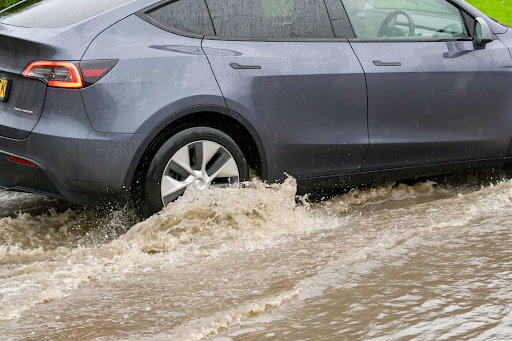
Benin Car Wading Depth is an important consideration for Cotonou motorists as flooding creates risks for engines, brakes, electronics and vehicle interiors.
Cotonou’s Flooding Raises Questions Over Safe Car Wading Depths
Flooding can quickly turn an ordinary journey through Cotonou into a difficult test for a vehicle. Water covering roads can hide potholes, open drains, and other obstacles, while excessive depth can cause serious mechanical and electrical damage.
For motorists in Benin, understanding Benin Car Wading Depth is therefore an important part of preparing for journeys during periods of heavy rainfall.
Why Floodwater Is Dangerous for Cars
A vehicle’s maximum wading capability depends on its design, intake position, ground clearance, electrical protection, and other engineering factors. There is no universal safe depth that applies to every car.
Manufacturer specifications should always take priority. Even when a vehicle has a published wading figure, the recommended speed and conditions may also apply.
Cotonou faces recurring flooding during heavy rainfall. The World Bank has identified urban flooding as a significant climate-related risk in Benin, with inadequate drainage and rapid urbanisation contributing to the problem.
Water Can Hide Road Hazards
One of the biggest risks is not necessarily the water itself. Floodwater can conceal potholes, damaged pavement, drains and debris.
A vehicle entering an unexpectedly deep section can suddenly lose traction or become partially submerged. Water can also enter the passenger compartment, damaging carpets, seats and electrical equipment.
This makes Benin Car Wading Depth only one part of the decision. Drivers also need to consider the condition of the road underneath the water.
Know Your Vehicle’s Limit
Different vehicles have very different capabilities. A compact hatchback may have a relatively low air intake and ground clearance, while a purpose-built SUV or pickup may be engineered for substantially deeper water.
Owners should check their vehicle handbook for the manufacturer’s maximum wading depth. The figure should never be treated as a target to reach during normal driving.
For motorists researching vehicles for Benin,AfriCarGroup Auto24 can also help compare specifications such as ground clearance and vehicle configuration.
Never Assume an SUV Is Floodproof
A high-riding SUV can provide additional clearance, but its size alone does not make it suitable for deep water. The location of the air intake and electronic components remains important.
Even a capable four-wheel-drive vehicle can suffer serious damage if water reaches the engine’s air intake. Water entering the cylinders can cause hydraulic lock, potentially resulting in major engine damage.
Driving Through Shallow Floodwater
If a flooded section is confirmed to be within the vehicle’s specified capability and there is no safer alternative, drivers should proceed cautiously. Maintaining a slow, steady speed can help avoid creating a large bow wave.
Drivers should avoid entering fast-moving water. Flowing water can affect vehicle stability and may be deeper than it appears.
After crossing water, brakes can also temporarily perform differently because brake components may be wet. Drivers should test braking carefully when conditions allow.
When Turning Around Is Safer
Benin Car Wading Depth should never be interpreted as permission to enter every flooded road below a particular measurement. Water levels can change quickly, and conditions can be difficult to judge from inside a vehicle.
If the depth is unknown, water is moving rapidly, or the road surface cannot be seen, turning around is generally the safer option. A few minutes of delay can be preferable to an engine, transmission or electrical repair.
Conclusion
Benin Car Wading Depth is an important consideration for motorists dealing with flooded roads in Cotonou, but manufacturer limits are only one part of flood-driving safety. Hidden road damage, moving water, and rapidly changing conditions can make even apparently shallow water dangerous.
Checking the vehicle handbook, avoiding unknown-depth water, and turning around when conditions are unsafe can help protect both motorists and their vehicles. Have you ever had to drive through serious flooding in Cotonou? Share your experience in the comments.